
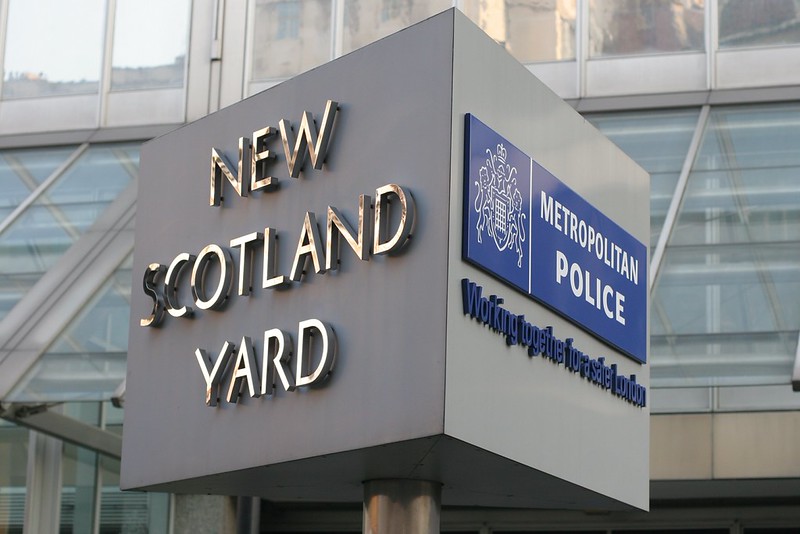
Evidence in the Undercover Policing Inquiry recently revealed that BAE Systems, the UK’s largest arms company, offered the Metropolitan Police money to spy on anti arms trade campaigners following the 1996 Seeds of Hope Ploughshares action which caused £1.4m worth of damage to Hawk aircraft. Four women were acquitted of criminal damage charges on the basis they were preventing a greater crime by taking action to stop BAE Systems exporting the aircraft to Indonesia for their use in war crimes against people in East Timor.
The information was disclosed during the questioning of former Detective Chief Inspector Dell on 1st July 2026. Dell managed the Special Demonstration Squad/Special Duties Squad (SDS) between 2001-2005, and worked on C-squad – the Special Branch department that dealt with protest – prior to this.
During questioning about the links between private companies and police spies, Dell stated that:
“I remember someone on C-squad telling me that BAE Systems had suffered another attack…BAE had offered the Branch money to finance so resources could be put into this”.
Dell denied that Special Branch took the money, stating:
“Even though the Branch could well have done with the money, they made the offer to the Commissioner, obviously, and it had to be declined”.
It appears likely that this refusal led BAE Systems to take matters into their own hands. The Seeds of Hope action took place in 1996, and by 1997, BAE Systems had embedded its own corporate spy, Martin Hogbin, at CAAT. Hogbin remained at CAAT until 2003.
However, this also didn’t stop the SDS spying on CAAT throughout this period. HN3, cover name “Jason Bishop”, was also authorised to target CAAT. Former Detective Sergeant Ron Gilbertson, HN49, stated that Bishop was “authorised to target CAAT because the group was known to hold protests and demonstrations, which had the potential to result in serious public disorder”.
Bishop also targeted Disarm DSEI, the coalition group organising against the DSEI arms fair, and was close friends with CAAT’s Media Coordinator, Emily Apple. However, documents revealed in the Inquiry show that anti arms trade campaigners weren’t targeted because of the threat they posed to public order, but because their protests “could influence the financial wellbeing of the State”.
CAAT’s Media Coordinator, Emily Apple, said:
“BAE Systems went to extraordinary lengths to spy on anti arms trade campaigners, and intrude into our lives. This is a private company essentially prepared to bribe the police for information about its critics. There are serious questions that the Inquiry needs to investigate about the complicity between successive governments, the police and arms companies to repress our right to protest in order to protect a trade that is complicit in multiple genocides and human rights abuses.
“However, it’s important to remember that this is not historical. The power of the arms trade to influence both government and policing policy is in evidence today. This is shown clearly in the proscription of Palestine Action, with documents detailing meetings Elbit Systems had, not just with the Home Office but with the Attorney General’s office, about how to crack down on protesters.
“Successive governments have tried to label our protests as unlawful or undemocratic. However, it is the arms trade, the government, and the police that are profoundly undemocratic, repeatedly subverting the law to repress, surveil and harass our protests.”