
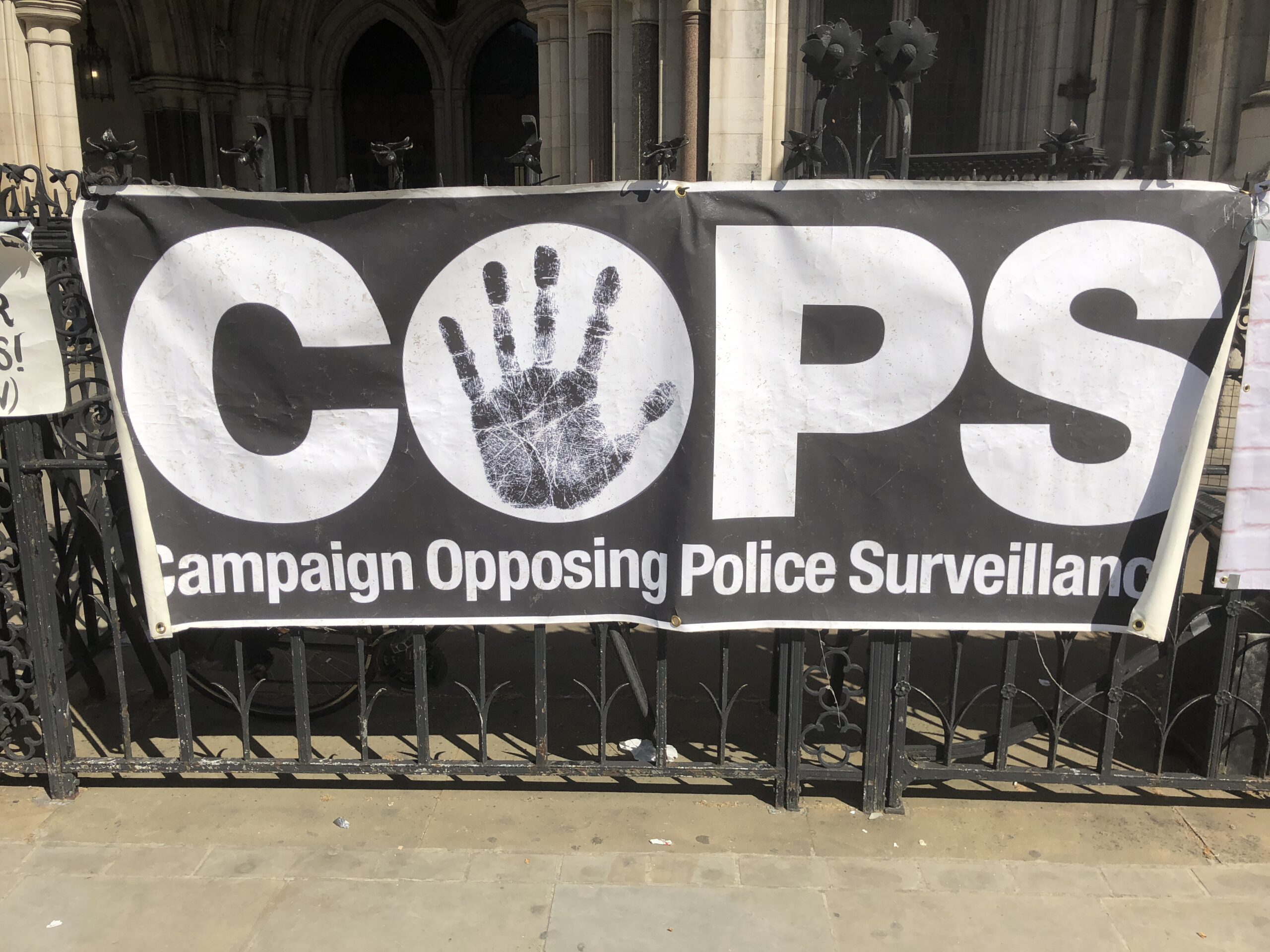
The Undercover Policing Inquiry has been running since 2015. It is the longest running public inquiry – and it is currently under threat due to the Home Office putting out a phoney consultation on its future.
It is clear that the Home Office either wants to scrap the Inquiry or severely limit its scope. CAAT is therefore supporting the Campaign Opposing Policing Surveillance in asking people to sign this letter to the Home Office to let them know this cannot happen.
So far, the inquiry has only considered one single undercover unit, the ‘Special Demonstration Squad’ (SDS), which was shut down in 2008. In the course of its investigations the Inquiry has seen and heard evidence of very serious misconduct, even criminality, by police officers. Some of this would never have been uncovered, had the police records not been shown to the people they were unaccountably spying on.
Some of the most egregious behaviour in undercover policing is yet to be heard by the Inquiry including, but not limited to, long-term, deceitful sexual relationships by undercover officers, miscarriages of justice, undercover police officers acting as agents provocateurs, and failures around the policing of racist criminal gangs. If the inquiry is at all curtailed at this point that evidence may never come to light.
Spying on CAAT
The inquiry is of utmost importance to CAAT supporters. As we have revealed, despite twice being refused Core Participant status, CAAT was, alongside other anti arms trade activists, deliberately targeted by undercover officers.
One officer, cover name ‘Jason Bishop’ – HN3 – infiltrated anti arms trade groups, including CAAT, from 2001-2005. He was part of the core organising group for Disarm DSEI – the campaign against Defence and Security Equipment International – the world’s largest arms fair that takes place every two years in London. Bishop was a signatory on the group’s bank account, was involved in transport logistics, and was, at times, responsible for collecting the group’s post.
As a close friend and trusted person within the organising group, he was also involved in committing criminal damage against arms companies. He drove for several actions, and was involved in covert actions involving throwing paint and glueing locks at company offices. There are also files that showed he was involved in the initial planning for an action against MoD vehicles that were being used to transport bombs to RAF Fairford during the illegal war with Iraq.
However, what’s also clear from the authorisation documents,is that anti-arms trade groups weren’t infiltrated because of their actions but because of the” financial value” of the arms trade to the state, and the fear that these actions could cause “embarrassment to UK government PLC.”
Intentional disruption and data gathering
We’ve also learnt through the inquiry that the SDS set out to undermine, disrupt and frustrate our political organising. Former Special Branch Commander, Janet Williams, testified that her “understanding” of the unit was to “disrupt from within”. Intelligence reports show that SDS officers looked for opportunities to cause conflict and undermine interpersonal relationships, as well as coordinating overt policing operations that led, in the words of HN3, to the environmentalist group Reclaim the Streets being “policed out of existence”.
The imagined threat of public order – a meaningless term when applied to a few people sitting in the road to far-right race riots – and “threat” to private business – was used to justify a massive data gathering operation against political campaigners. Former SDS manager, DCI Michael Dell, stated that the role of Special Branch was to collate “colossal amounts of information” on activists. It made no difference whether or not they were engaged in illegal actions. This included reporting the full name and date of birth of CAAT’s current Media Coordinator’s week old baby; a report that Dell admitted meant risked creating a Special Branch file for the child.
It also appears that arms companies had a direct line to the Commissioner of the Met. Dell testified that following the incredible Seeds of Hope Ploughshares action where four women were acquitted of causing £1.4m worth of damage to Hawk aircraft, BAE Systems offered the Met a lot of money to spy on anti arms trade activists. The Met apparently turned down this money, and BAE sent its own corporate spy, Martin Hogbin, into CAAT. Hogbin was at CAAT from 1997-2003. CAAT believes it is inevitable that intelligence was shared between BAE and Special Branch.
Subverting democracy and contempt for the law
Throughout the evidence of numerous undercover officers and their managers, their contempt for the law has been explicit. They covered up criminal offences committed by spycops, misled courts, breached legal privilege, and acted with total disregard for the law they were supposedly meant to uphold. They subverted what any reasonable person should think are the tenets of a supposed liberal democracy, while accusing activists of subversion, and acting to protect their operation at all costs.
However, this is not just historical. The SDS built a language of threat around protest that’s led to the exceptionally repressive political climate we’re now living in. The space for protesting is disappearing by the day. This political policing is in evidence not only with the proscription of Palestine Action, but in the ever increasing draconian legislation that successive governments have introduced to repress and suppress our movements.
It is therefore essential, not only to the spycops’ survivors, but to everyone involved in political campaigning, that the Inquiry continues to investigate these abuses and the extent of political policing in later years.
The Home Office must not bow to the obvious vested interests wanting to shut down the spycops Inquiry.
Sign the letter, find out more about the COPS campaign and join CAAT in fighting for justice for spycops’ survivors.