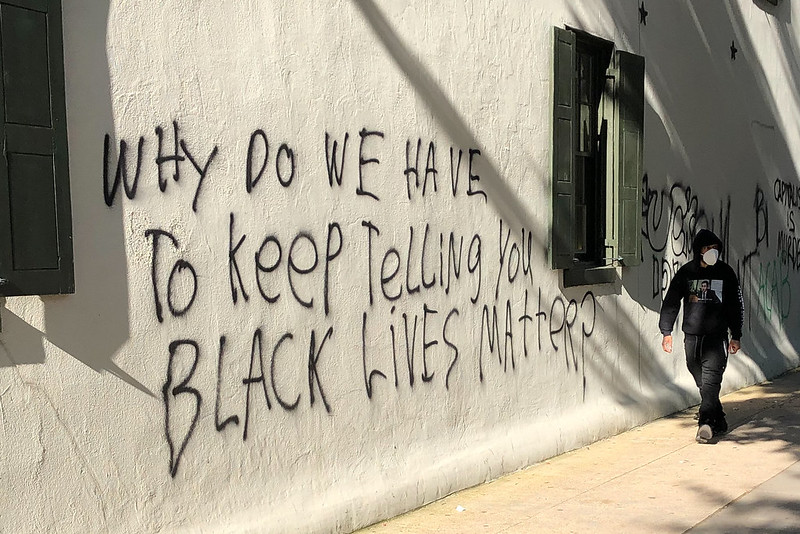
Person walking next to a wall. Writing on the wall says 'Why do we have to keep telling you Black Lives Matter?'

Militarised policing

US police forces are among the most lethal in the world, killing over 1,000 civilians a year for the past five years, disproportionately Black and minority ethnic people. Racism is embedded in the DNA of US policing from its beginnings in slave patrols. Police forces systematically target people and communities of colour and immigrant communities for arrest, abuse, and violence. US policing has become increasingly militarised due to the free transfer of military equipment to police forces across the country. This militarised policing is frequently deployed to violently repress protests, especially those involving Black, Indigenous, and other non-white groups and communities.

Last updated 26 November 2025

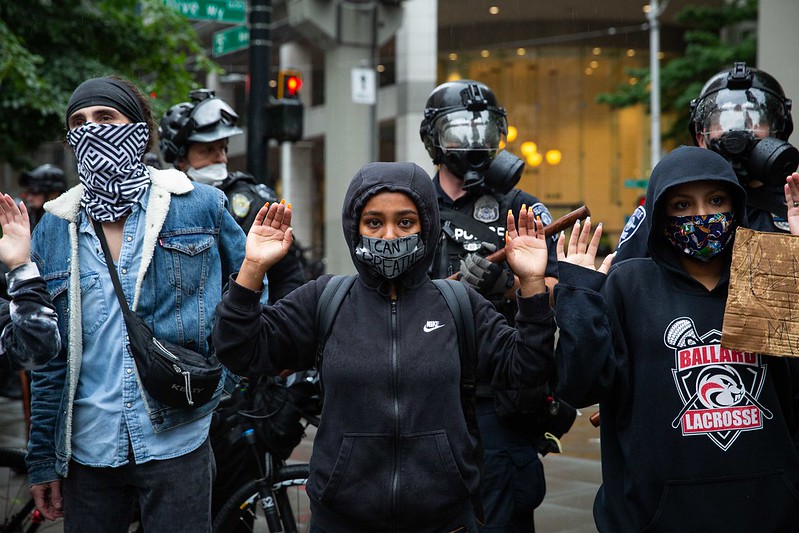
The murder of George Floyd by Minneapolis police officer Derek Chauvin in May 2020 sparked a wave of protests and uprisings against police racism and violence across the US, as part of the broad Black Lives Matter movement. These protests were themselves met with sometimes extreme levels of violence by the police. US police departments and other security service departments have used, pepper spray, rubber bullets/baton rounds, smoke canisters & pepper balls, flash-bang grenades, riot shields and batons against journalists, medics, and legal observers. Security services have carried out widespread arbitrary detention of protestors or suspected protestors. Solidarity protests also took place around the world, including in the UK, often also highlighting racism in their own countries.  The UK has supplied significant quantities of anti-protest equipment to the US, including tear gas products, batons and riot shields. UK-supplied riot shields were used against Black Lives Matter protestors in 2020 by at least 6 law enforcement agencies.

Police violence and security spending in the US

The murder of George Floyd was unusual in the extremely high level of public and media attention it received – largely due to its unspeakable brutality, captured on a phone camera and seen by millions. The fact that a police officer was sentenced to 20 years in prison for the killing was even more unusual. But it was also just one of 1,162 police homicides that year, a similar number to most recent years. Although Black people make up just 13% of the US population, they were 2.8 times more likely than white people to be killed by police in 2025. Beyond killings, Black people face systematic discrimination, abuse, violence, and racism at the hands of the police and at every stage of the criminal justice system.

While there are widespread calls for police reform, many activists see the police in the US as being a fundamentally racist institution from its very inception, indeed arguing that policing in the US was established to maintain white supremacy. This has prompted growing calls to defund the police, transferring resources to community-based public safety efforts, mental health support, and poverty reduction measures among others, and ultimately to abolish the police in their current form. Police budgets in the US are huge, often accounting for the majority of a city’s expenditure. The New York Police Department (NYPD)’s annual budget for fiscal year 2025 was over US$ 5.8 billion, down about half a billion dollars from the previous year, but still more than the military spending of many nations worldwide.

The past and current Donald Trump presidential administrations have seen a massive increase in police powers. Following the BLM protests, in May 2022, then-President Biden issued Executive Order 14074 which sought to curtail police violence, for example, requiring federal agencies to ban chokeholds and other tactics. This followed the failure of the US Senate to pass a more wide-reaching police reform bill. Immediately upon taking office, President Trump in his second administration reversed this and many other more progressive orders. On April 28, 2025, he issued Executive Order 14288 “Strengthening and Unleashing America’s Law Enforcement to Pursue Criminals and Protect Innocent Citizens.” The order directs federal resources to promote aggressive policing tactics and militarisation of local law enforcement.
Crackdown on protests

As well as the repressive nature of policing against communities of colour in general, there has been an escalation of militarised state violence against protests involving these communities.

One recent example was the violent assault by hundreds of law enforcement officers from around the country on the Standing Rock “water protectors” encampment in North Dakota in 2017, who were protesting the construction of the Dakota Access oil pipeline through indigenous land. The police came with mine-resistant military vehicles and armoured personnel carriers, and used tear gas, rubber-coated steel bullets, water cannons, tasers, and stun-grenades among others. Since the new phase in Israel’s war in Gaza, in October 2023, pro-Palestine and anti-genocide demonstrators have also faced significant police violence. For example, US police have intervened to forcibly remove protestors from US campuses, and have failed to intervene to prevent retributory violence against protestors from counter-protestors.

The police’s approach to minority ethnic community protests and political protests contrasts with the often hands-off or even protective approach taken by police towards far-right protests. One study found that, between 1 May and 28 November 2020, police were more than twice as likely to intervene to break up protests by left-leaning groups (including BLM) as right-wing ones, and that when they did so, they were 50% more likely to use force. Thus, overall, the police were more than three times as likely to use force against left-wing protests, though academic research suggests that most American domestic terrorists are politically on the right, and right-wing attacks account for the vast majority of fatalities from domestic terrorism.

Movements for change

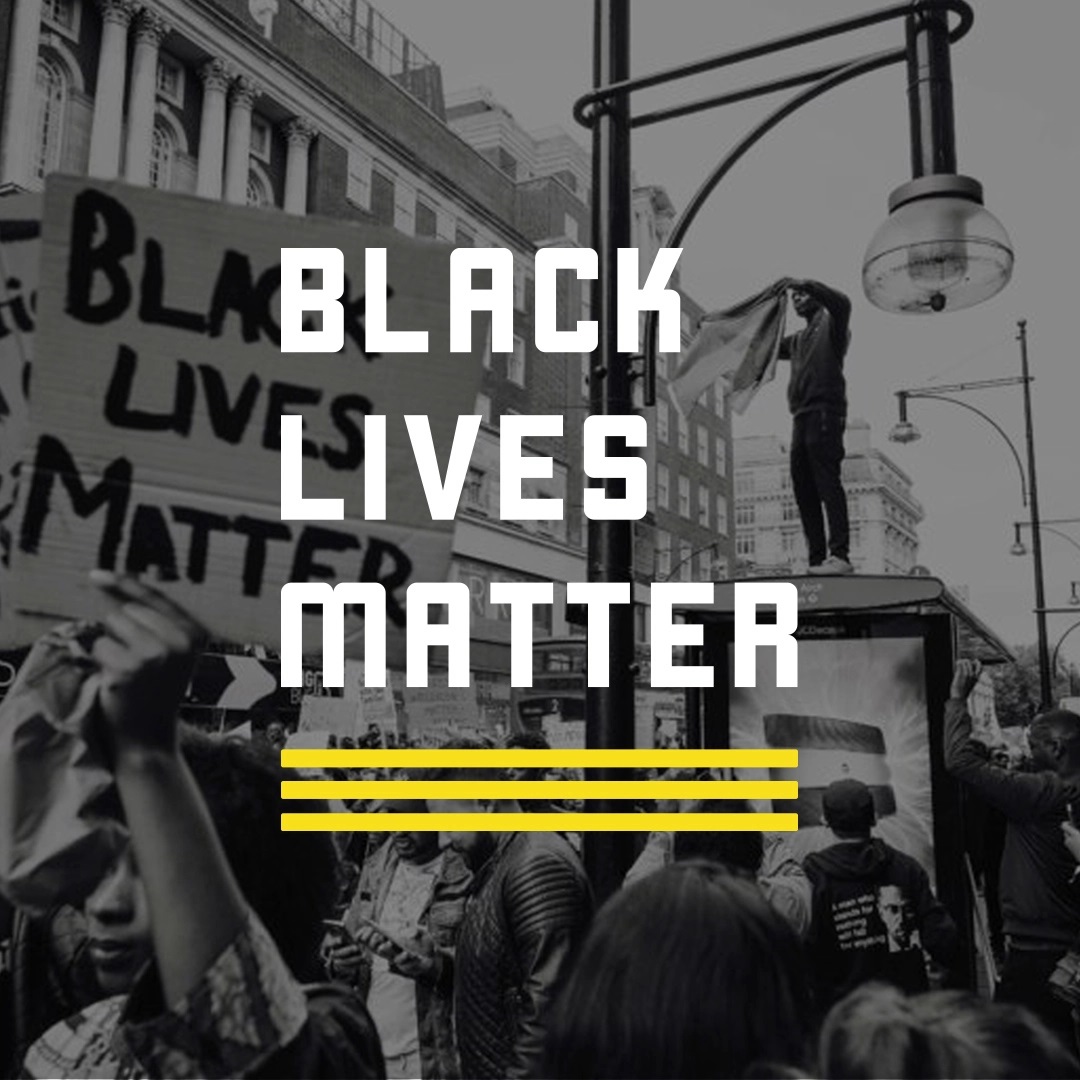
Black Lives Matter logo superimposed on a background of a BLM protest

Black Lives Matter

#BlackLivesMatter was founded in 2013 in response to the acquittal of Trayvon Martin’s murderer. Black Lives Matter Global Network Foundation, Inc. is a global organization in the US, UK, and Canada, whose mission is to eradicate white supremacy and build local power to intervene in violence inflicted on Black communities by the state and vigilantes. By combating and countering acts of violence, creating space for Black imagination and innovation, and centering Black joy, we are winning immediate improvements in our lives.

Image of a white dove flying through broken prison bars against a red background

AFSC - Ending mass incarceration

American Friends Service Committee (AFSC) resources on prisons and policing. AFSC works to promote healing – instead of punishment – in the U.S. criminal justice system. The United States currently has the highest incarceration rate of any country in the world, disproportionately impacting poor people and people of color. We advocate for alternatives to incarceration, better reintegration after prison, an end to prison privatization, more humane conditions of confinement, and ultimately, the abolition of prisons.

Police militarisation and the 1033 program

Policing in the US has always had a militarised aspect, especially towards Black and Indigenous people. One of the most shocking examples of this in modern times was the 1985 bombing by police in Philadelphia of a house occupied by members of MOVE, a Black political and religious movement, killing eleven people including five children. A 2018 academic study found that militarised “special weapons and tactics” (SWAT) teams were more often deployed in communities of color, despite no detectable crime reduction benefits.

Nevertheless, the militarisation of police forces in the US has increased hugely since 9/11, under the Federal Government’s 1033 program, inaugurated in 1990. This programme provides for the free transfer of huge quantities of surplus military equipment from the Department of Defense (DoD) to police forces, including automatic weaponry, mine-resistant armoured vehicles, helicopters, grenade launchers, and unmanned air and ground vehicles, as well as more mundane, non-military supplies. While the 1033 program existed before 9/11, the surpluses generated by troop withdrawals from Afghanistan and Iraq, combined with the growing counter-terror ideology adopted by law enforcement, led to a massive increase in the program. According to a 2020 paper from Brown University’s Costs of War program, the DoD recorded just US$ 27 million of transfers to police forces between 1990 (when the 1033 program started) and 11 September 2001, it recorded US$ 1.6 billion in transfers since 9/11, up to June 2020. The upsurge gathered pace particularly from around 2010, as troop withdrawals from Iraq began. However, this only covers equipment tracked by the DoD. According to the Defense Logistics Agency in 2025, a total of US$ $7.6 billion had been transferred to participating police forces since 1990, using the initial acquisition value for the calculation.

Police militarisation does not just involve equipment, but also the growth of a counter-terrorism approach to policing, with increased surveillance and intelligence operations, and more generally, police forces’ “use of military language and counterinsurgency tactics, the spread of police paramilitary units, and military-derived ideologies about legitimate and moral uses of violence”.

Militarised immigration enforcement

The US’ Immigration and Customs Enforcement (ICE) agency, long known for sowing terror among irregular migrants and Latin and South American communities in the US more generally, has seen a massive expansion of its budget and powers. Under the second Trump administration, which began in 2025, the US’ immigration control system has become increasingly  militarised and unaccountable. Plainclothes masked ICE agents now routinely round up assumed migrants in infamous “ICE raids”, most of whom have no criminal records, to carry out President Trump and the Republic Party’s “mass deportation” agenda. Migrants including children, and in some cases US citizens erroneously arrested, have been unlawfully detained incommunicado in appalling conditions, according to the UN’s human rights chief. Non-citizens have been effectively extraordinarily rendered to US allies including El Salvador and Eswatini where they face years of imprisonment often without trial.

ICE is increasingly acquiring military-grade weapons and equipment. According to a 2025 analysis of federal government contracting data by Popular Information, ICE has increased spending on “small arms, ordnance, and ordnance accessories manufacturing” by 700% compared to 2024 levels.

UK supply of anti-protest equipment

The UK exports a significant amount of policing equipment to the US. Since 2020, 26 standard and 10 open UK export licenses have been granted to British companies to export anti-protest equipment to the US, primarily within the PL5001 – Security and para-military police goods export category. This includes, in order of volume: anti-riot/ballistic shields and their components and technologies, smoke and pyrotechnic ammunition, crowd control ammunition and component, smoke canisters and their components, training smoke and ammunition, portable incapacitating substance riot control devices, and portable riot control electric-shock devices.

The approved licences include many that specify or cover equipment for protest suppression. We have very little information about the end-user of relevant equipment, although a 2018 OIEL covering CS/tear gas equipment has a footnote stating the licence was “granted for Armed Forces and Law Enforcement agencies end use.” A 2020 investigation by Lighthouse Reports, the Guardian, Sky News and Bellingcat has revealed the violent use of UK-manufactured DMS Scorpion solo shields by multiple US law enforcement agencies.

There are a few further examples of UK companies supplying anti-protest equipment to the US that we have identified. Primetake produces CS irritant rounds and also has a “public order” range which includes irritant sprays, rubber batons and rubber ball rounds; the company exhibited at the 2025 DSEI arms fair. The company applied for ML3a (ammunition) export licences to the US in 2008 and 2010. Centanex produces CS irritant ammunition, ball grenades and distraction and smoke grenades; it applied for ML4a export licences to the US in 2013 and 2014. We don’t what further UK equipment may have been used in the US. Confirmation requires someone to have seen and recorded the equipment in situ, and for it then to have been identified (either at the time or once images and information have been shared).

In June 2020, the then- shadow international trade secretary, Emily Thornberry, wrote to then international trade secretary Liz Truss  to request the suspension of exports of riot control equipment to the US, a sentiment echoed by a cross-party group of 166 MPs who also wrote to Truss. This did not work, as in October 2020, the UK approved the sale of UK£ 420,000 worth of ‘anti-riot’ shields to the US. When asked about the export of protest suppression equipment to the US, the UK government said in 2020 that it has rigorous export controls and “will not licence the export of items where to do so would be inconsistent with the Consolidated Criteria [the government’s export guidelines]”. This is simply not true. The Government repeatedly issues export licences where there is a clear risk that the goods might be used for internal repression, in the commission of a serious violation of international humanitarian law, or where the export would provoke or prolong conflict.

Key statistics

1,127

Police killings in 2020

Read more

27%

Proportion of Black people killed by police

Read more

$7.4 billion

Military equipment transferred to US police since 9/11

Read more

Related content

Person walking next to a wall. Writing on the wall says 'Why do we have to keep telling you Black Lives Matter?'

Racist State Violence: A US and UK Problem

The violent crackdown and use of rubber bullets and CS gas on peaceful protesters in the United States has shone a light on the increased militarisation of the police which is happening around the world. As we demand an end to the export of arms of the type used to shut down Black Lives Matter protests,

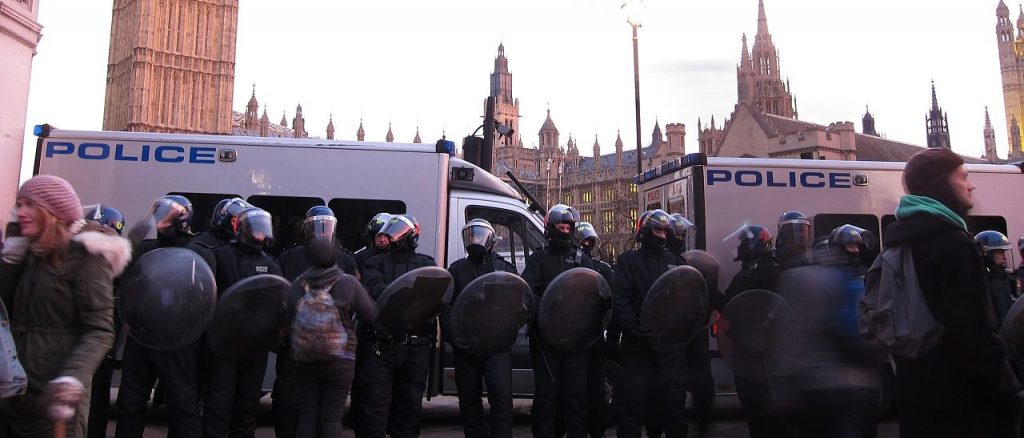
Police with shields and helmets in front of the House of Commons

Policing

State violence is the same whether it’s carried out by the military or police. The line between the two has always been blurred and, via equipment, tactics and terminology, this is increasing.

Black Lives Matter protest in Seattle, May 2020

FAQ – UK export approvals

Following the murder of George Floyd, protests in the US against racism and police violence have been met with further state violence. The response in the UK has included anger at the potential role of the UK in supplying equipment that could be used to suppress protests. Here we try to answer some of the

CAAT would not exist without its supporters. Each new supporter helps us strengthen our call for an end to the international arms trade.

Keep in touch